


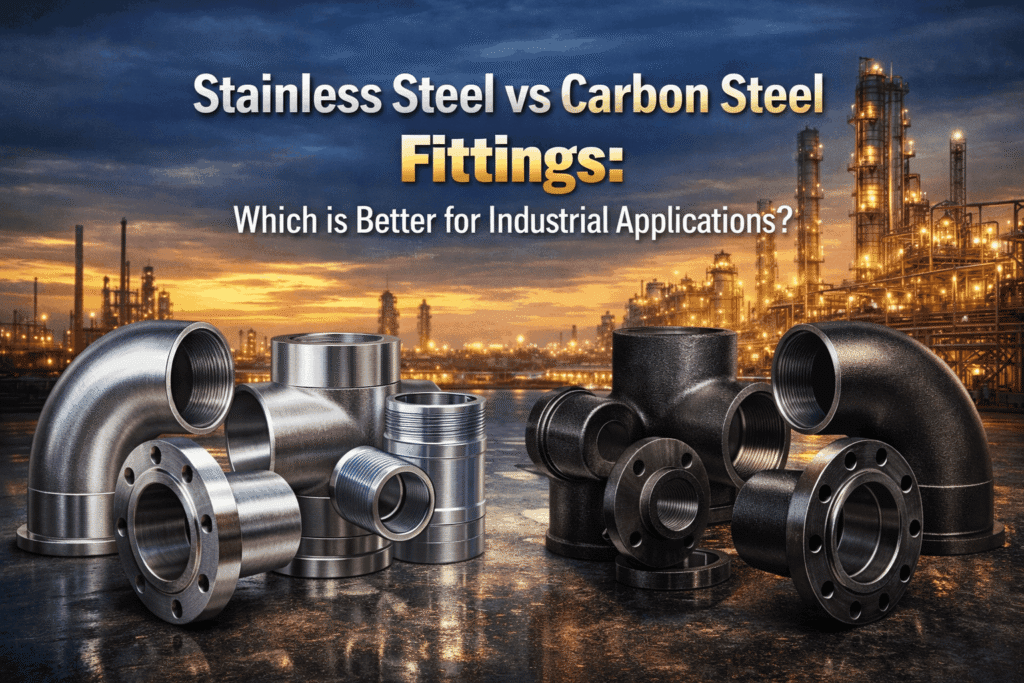
Industrial pipeline systems rely on high-quality fittings to ensure safe, efficient, and reliable flow control. Among the most widely used materials in industrial piping systems are stainless steel and carbon steel fittings. Both materials offer unique advantages, but selecting the right option depends on the application, operating environment, and project requirements. Understanding the differences between stainless steel and carbon steel fittings can help engineers and procurement teams choose the most suitable solution for their pipeline systems.
What Are Stainless Steel Fittings?
Stainless steel fittings are widely used in industries where corrosion resistance, durability, and hygiene are critical. These fittings are manufactured from stainless steel alloys that contain chromium, which forms a protective oxide layer on the surface. This layer prevents rust and corrosion even when exposed to moisture or chemicals.
Because of their excellent resistance to corrosion and oxidation, stainless steel fittings are commonly used in chemical processing plants, food and beverage industries, marine environments, and water treatment systems. They also offer high strength and long service life, making them ideal for demanding industrial applications.
Another advantage of stainless steel fittings is their ability to perform well under extreme temperatures. They can withstand both high heat and cold conditions without compromising structural integrity.
What Are Carbon Steel Fittings?
Carbon steel fittings are known for their strength and cost-effectiveness. These fittings are manufactured from steel that contains carbon as the primary alloying element. Carbon steel offers high mechanical strength and can handle high-pressure systems effectively.
Carbon steel fittings are commonly used in oil and gas pipelines, power plants, and heavy industrial applications where strength and durability are essential. They are capable of handling high-pressure and high-temperature conditions, making them suitable for critical industrial environments.
However, carbon steel fittings are more prone to corrosion when exposed to moisture or chemicals. For this reason, they are often coated, painted, or treated to improve corrosion resistance.
Key Differences Between Stainless Steel and Carbon Steel Fittings
When comparing stainless steel and carbon steel fittings, several factors should be considered.
Corrosion Resistance:
Stainless steel offers superior corrosion resistance compared to carbon steel. This makes stainless steel fittings ideal for environments exposed to moisture, chemicals, or marine conditions.
Strength and Durability:
Carbon steel fittings generally offer higher tensile strength and are widely used in high-pressure pipeline systems. However, stainless steel fittings also offer excellent durability and corrosion resistance.
Cost:
Carbon steel fittings are typically more affordable than stainless steel fittings. For projects where corrosion resistance is not a major concern, carbon steel may be the more economical choice.
Maintenance:
Stainless steel fittings require less maintenance because they resist rust and corrosion. Carbon steel fittings may require protective coatings and regular inspection to prevent corrosion damage.
Applications of Stainless Steel and Carbon Steel Fittings in Industry
Both stainless steel and carbon steel fittings are essential components in modern industrial pipeline systems. Their usage varies depending on the operational environment, fluid type, and performance requirements.
Stainless steel fittings are widely used in industries that require excellent corrosion resistance and hygiene standards. These include food processing plants, pharmaceutical manufacturing, chemical processing facilities, and marine environments. Because stainless steel does not easily rust or degrade when exposed to moisture and chemicals, it is often the preferred choice for pipelines carrying corrosive liquids or gases. Additionally, stainless steel fittings maintain their structural integrity even in extreme temperatures, making them suitable for both high-temperature and cryogenic applications.
Carbon steel fittings, on the other hand, are commonly used in heavy industrial sectors such as oil and gas, power generation, and large-scale infrastructure projects. Their high tensile strength allows them to withstand high-pressure systems and demanding mechanical loads. Carbon steel fittings are frequently used in steam pipelines, refinery systems, and industrial fluid transport networks where durability and strength are critical.
In many industrial projects, engineers carefully evaluate operating conditions before selecting the appropriate fitting material. Factors such as corrosion risk, pressure rating, installation environment, and budget all influence the final decision. By selecting the correct fittings, companies can improve system reliability, reduce maintenance costs, and ensure safe pipeline operation over the long term.
For industrial pipeline solutions, sourcing fittings from a reliable supplier ensures consistent quality and performance across all applications.
Choosing the Right Fittings for Your Application
The choice between stainless steel and carbon steel fittings depends largely on the operating environment and the type of fluid being transported. For pipelines exposed to moisture, chemicals, or corrosive environments, stainless steel fittings are usually the better option. On the other hand, carbon steel fittings are suitable for high-pressure industrial systems where cost efficiency and mechanical strength are priorities.
At Najmat Al Freej Building Material Trading L.L.C, we supply a comprehensive range of stainless steel and carbon steel fittings designed for industrial pipeline systems. Our products support industries such as oil and gas, water systems, HVAC installations, marine engineering, and infrastructure projects across the UAE.
Choosing the right fittings ensures reliable performance, improved safety, and long-term operational efficiency for any industrial pipeline system.