Industrial pipeline systems rely heavily on valves to control the flow of liquids, gases, and other materials. Choosing the right industrial valve is essential for ensuring safety, efficiency, and long-term reliability in any piping system. Whether used in oil and gas plants, water distribution systems, HVAC installations, or manufacturing facilities, selecting the appropriate valve can significantly impact operational performance.
In this guide, we explain the key factors to consider when choosing the right industrial valve for your pipeline system.
Understanding the Role of Industrial Valves
Industrial valves are mechanical devices designed to regulate, control, or direct the flow of fluids within a pipeline system. They allow operators to start, stop, or adjust flow rates and maintain pressure within the system.
Valves are critical components in industries such as oil and gas, water treatment, marine engineering, chemical processing, and infrastructure projects. High-quality valves ensure safe operation and help prevent leaks, pressure failures, and equipment damage.
Common Types of Industrial Valves
There are several types of valves used in industrial piping systems, each designed for specific functions.
Gate Valves
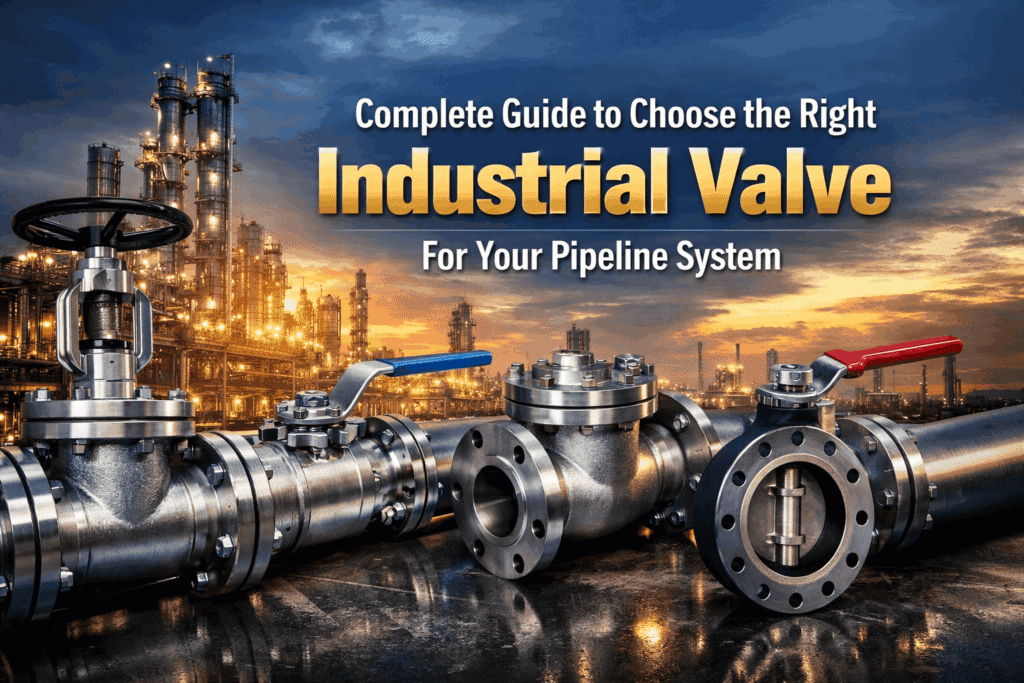
Gate valves are primarily used for on/off flow control. They are ideal for applications where the valve remains either fully open or fully closed. These valves are commonly used in water supply systems and large pipeline networks.
Ball Valves
Ball valves are widely used because of their durability and tight sealing capability. They operate with a rotating ball that controls the flow. Ball valves are suitable for gas systems, chemical pipelines, and high-pressure environments.
Globe Valves
Globe valves are designed for precise flow regulation. Their structure allows operators to control flow rates effectively, making them suitable for steam and process control systems.
Check Valves
Check valves allow fluid to flow in only one direction. They are essential for preventing backflow that could damage pumps or other equipment in the system.
Butterfly Valves
Butterfly valves are lightweight and compact. They are commonly used in large diameter pipelines and applications requiring quick operation.
Material Selection for Industrial Valves
Choosing the right valve material is equally important. Different materials offer varying levels of strength, corrosion resistance, and durability.
Common materials include:
- Stainless Steel (SS): Excellent corrosion resistance and durability.
- Carbon Steel (CS): Strong and cost-effective for high-pressure systems.
- Cast Iron (CI): Often used in water distribution systems.
- Brass and Aluminum: Used for lighter industrial applications.
The material should match the fluid type, pressure level, and environmental conditions of the pipeline system.
Pressure Rating and System Compatibility
Every industrial valve is designed to handle specific pressure levels. Pressure ratings such as 150#, 300#, 600#, or 1000 WOG indicate the maximum pressure the valve can safely withstand.
Before selecting a valve, it is essential to evaluate:
- Pipeline pressure requirements
- Operating temperature
- Fluid type (gas, steam, chemicals, water)
- Pipeline size and flow rate
Selecting a valve with the correct pressure rating ensures safe and efficient operation.
Conclusion
Choosing the right industrial valve requires careful evaluation of the valve type, material, pressure rating, and application requirements. A properly selected valve improves system performance, increases safety, and reduces maintenance costs over time.
At Najmat Al Freej Building Material Trading L.L.C, we supply a wide range of industrial valves, fittings, flanges, camlocks, and pipeline components designed for demanding industrial applications. Our products support industries including oil and gas, water systems, HVAC, marine engineering, and infrastructure development across the UAE.
For expert guidance or product inquiries, contact our team to find the right valve solution for your project.