Industrial pipeline systems play a vital role in transporting fluids, gases, and chemicals across various industries. From oil refineries and water treatment plants to HVAC systems and manufacturing facilities, pipelines are essential for maintaining smooth and efficient operations. However, a pipeline system is more than just pipes. It relies on several critical components that ensure safe flow control, pressure management, and reliable connections.
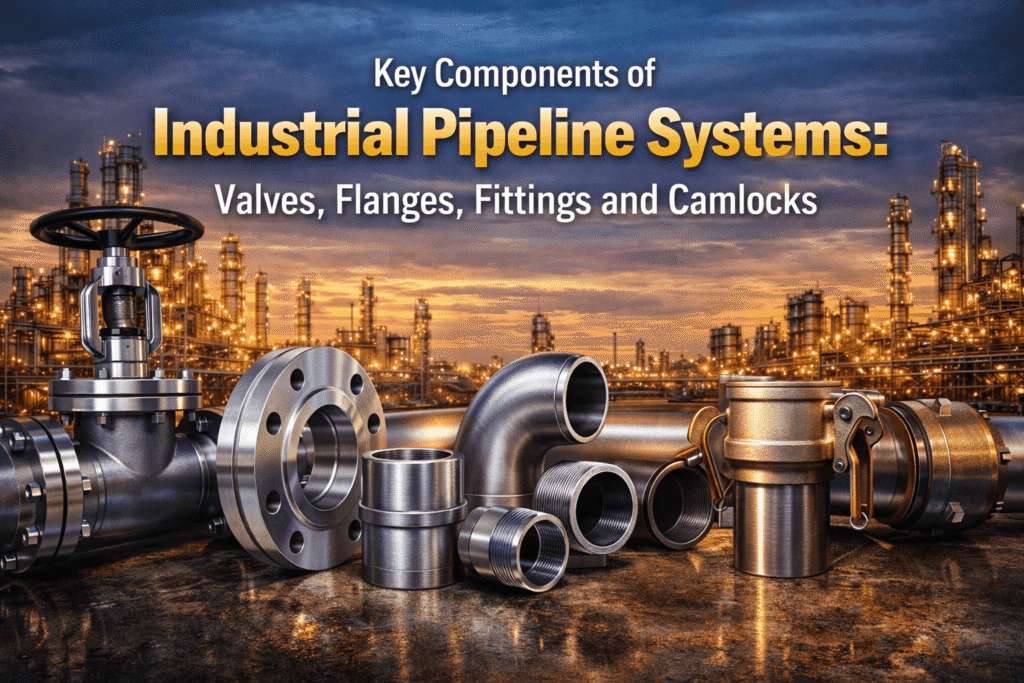
Among the most important elements of any industrial pipeline system are valves, flanges, fittings, and camlock couplings. Each of these components serves a specific function that contributes to the overall performance and safety of the pipeline network.
Understanding how these components work together can help engineers, contractors, and procurement professionals select the right products for their industrial applications.
Industrial Valves: Controlling the Flow
Valves are one of the most important components in a pipeline system. Their primary function is to regulate, start, stop, or control the flow of liquids and gases within pipelines. Without valves, it would be impossible to manage fluid movement safely and efficiently.
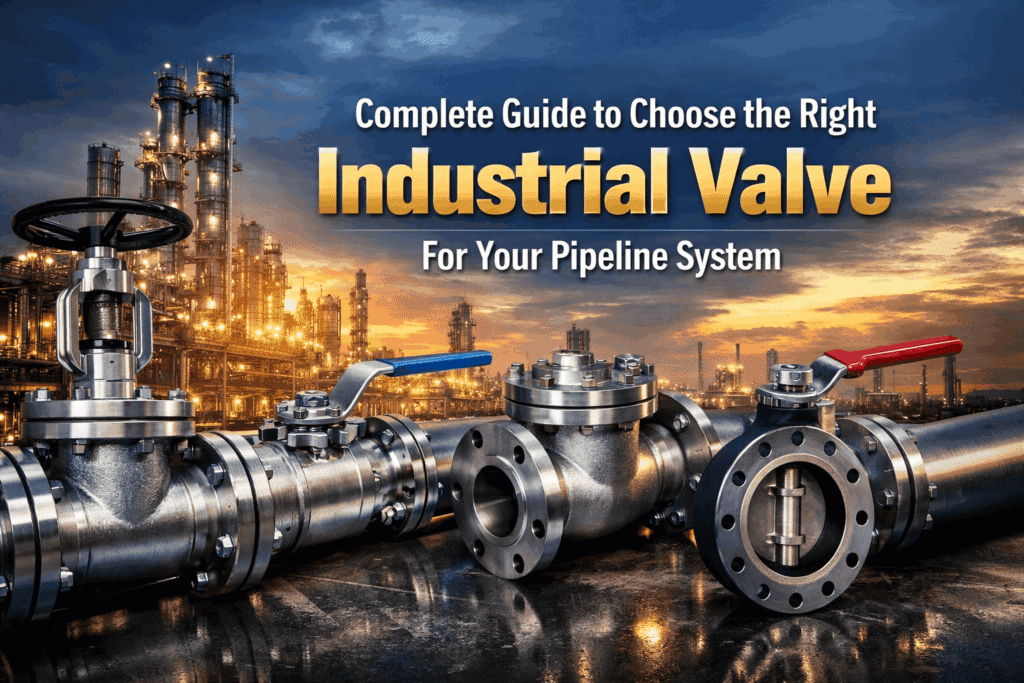
Different types of valves are used depending on the application. Gate valves are commonly used for full-open or full-shut operations in pipelines. Ball valves are known for their tight sealing capabilities and durability, making them suitable for high-pressure systems. Globe valves allow precise flow regulation, while check valves prevent backflow that could damage equipment such as pumps.
Industrial valves are manufactured using materials such as stainless steel, carbon steel, forged steel, and cast iron to ensure durability and resistance to harsh operating conditions. Selecting the correct valve type and material is essential for maintaining reliable pipeline performance.
Flanges: Secure Pipeline Connections
Flanges are used to connect pipes, valves, pumps, and other equipment within a pipeline system. These components provide a strong and secure joint that allows sections of pipelines to be assembled or disassembled easily for maintenance or inspection.
Flanged connections are widely used in industrial applications because they offer durability and flexibility. They are especially useful in systems where components must be replaced or serviced regularly.
Common types of flanges include weld neck flanges, slip-on flanges, socket weld flanges, threaded flanges, and blind flanges. Each type is designed for specific pressure and temperature conditions. Flanges also come in various pressure ratings such as 150#, 300#, and higher, depending on the pipeline system requirements.
Proper flange installation helps ensure leak-proof connections and structural stability within industrial piping networks.
Pipe Fittings: Directing and Adjusting Flow
Pipe fittings are essential components that allow pipelines to change direction, adjust pipe sizes, or connect different pipeline sections. They help create a flexible and adaptable piping system that can be installed in complex industrial environments.
Common types of fittings include elbows, tees, reducers, caps, and couplings. Elbows are used to change the direction of flow, while tees allow pipelines to branch into multiple directions. Reducers help connect pipes of different diameters, ensuring smooth fluid flow throughout the system.
Fittings are manufactured from various materials such as stainless steel, carbon steel, brass, and aluminum. The choice of material depends on factors such as pressure rating, fluid type, and environmental conditions.
High-quality pipe fittings ensure proper alignment, minimize leakage risks, and maintain consistent pipeline performance.
Camlock Couplings: Quick and Secure Connections
Camlock couplings, also known as cam and groove couplings, are widely used in industrial fluid transfer systems. These couplings provide a quick and secure method of connecting and disconnecting hoses and pipelines without the need for tools.
Camlocks are commonly used in industries such as petroleum, chemical processing, agriculture, and water transfer. They are available in different materials, including stainless steel, brass, and aluminum, allowing them to handle various fluids and operating conditions.
The main advantage of camlock couplings is their ability to create fast and reliable connections. This makes them ideal for applications where pipelines need to be connected and disconnected frequently.
Conclusion
Industrial pipeline systems depend on multiple components working together to ensure efficient and safe fluid transportation. Valves control the flow of fluids, flanges provide secure connections between pipeline sections, fittings allow flexibility in pipeline design, and camlock couplings enable quick and reliable hose connections.
Choosing the right combination of these components is essential for maintaining system reliability, safety, and operational efficiency. Proper selection of materials, pressure ratings, and product quality plays a significant role in ensuring long-term pipeline performance.
At Najmat Al Freej Building Material Trading L.L.C, we supply a wide range of industrial valves, flanges, fittings, camlock couplings, pipes, and pipeline accessories designed for demanding industrial applications. Our products support industries including oil and gas, water systems, HVAC installations, marine operations, and infrastructure projects across the UAE.
Selecting high-quality pipeline components helps ensure safe operations, improved efficiency, and long-term reliability for any industrial piping system.